Liner Services

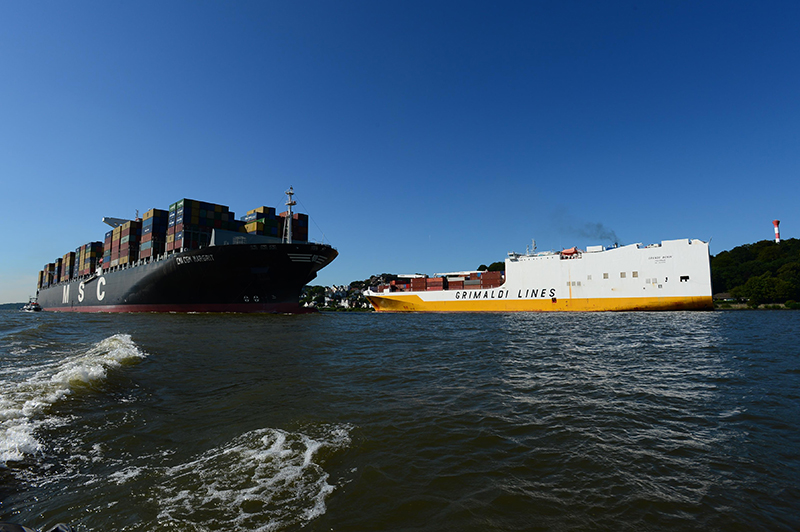
Hamburg is often called the gateway to the world. And in fact, shipping lines connect the city to more than 900 other ports in 174 countries around the world. About 12,000 seagoing ships call at the Port of Hamburg every year. They meet almost any demand, from full container loads and consolidated container loads through conventional general cargo, project cargo and heavy lifts to Ro-Ro cargo.


view
 

Connections to 900 Destinations

Hamburg has one of the tightest-linked networks of liner services in Europe and thus serves an important function as a transport hub in the worldwide flow of goods.


view
 

Database liner services

Here you find all liner services.

more....


view
 

News zum Thema

SCA Transforest launches new feeder service between northern Sweden and the Port of Hamburg
03.03.2010 - 15:28

The Swedish paper and timber products manufacturer Svenska Cellulosa Aktiebolaget (SCA) and its transport and logistics unit SCA Transforest have been operating a regular scheduled liner service called “Container Express” since 1 March 2010, linking northern Sweden and the Port of Hamburg.


Maersk Line launches third Far East service from Hamburg
18.02.2010 - 13:02

On 12 February 2010, the container ship MAERSK SYDNEY called at the Port of Hamburg for the first time as part of the Maersk Line’s expanded AE-10 scheduled liner service.

This liner service links the ports of Shenzhen (Dachan Bay), Ningbo, Shanghai, Kaohsiung, Shenzhen (Yantian), Hong Kong and Tanjung Pelepas with continental Europe.


What is tramping?

Answer

Ships engaged in the tramp trade do not have a fixed schedule, as is the case in liner trade. The route results from specific orders to ship cargo to a particular destination.

What is liner trade?

Answer

Liner ships call at various ports according to a regular timetable, as opposed to tramp ships. More than one ship can operate on a particular line.

What is a feeder vessel?

Answer

Feeder vessels are responsible for the further transport and distribution of containers to smaller ports. Many feeder ships pass through the Kiel Canal from Hamburg to the Baltic Sea area.